

Low Correlation & Portfolio Optimization: True Diversification
Low Correlation & Portfolio Optimization: True Diversification
This is the most hardcore financial value of fine art. The core of Modern Portfolio Theory (MPT) is that as long as the correlation coefficient between asset and the existing portfolio, incorporating it can improve the risk-return profile.For a portfolio containing risky assets and fine art, the optimal weight for the risky asset is: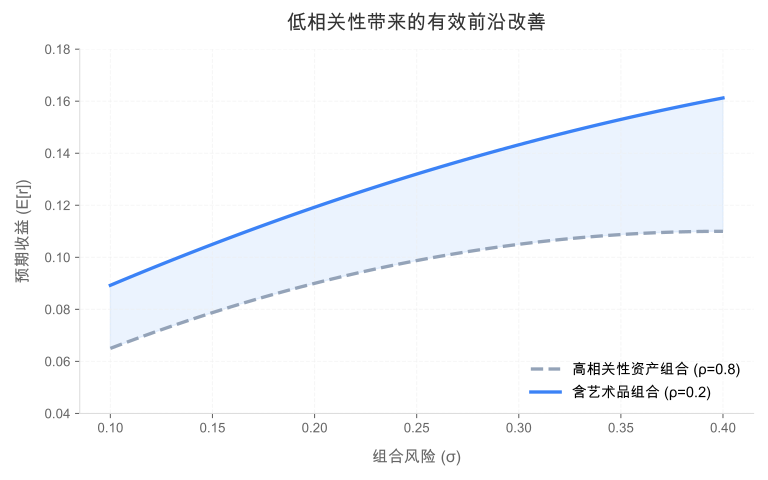
Numerous empirical studies (such as Mei & Moses, 2002) show that the long-term correlation coefficient between the art index and the S&P 500 is only in the 0.1–0.3 range, much lower than the 0.6–0.8 for real estate and stocks. Even if the Sharpe ratio of art itself is not astonishing, the diversification benefits brought by its low correlation are enough to elevate the Sharpe ratio of the entire portfolio. This stems from the fact that the value creation logic of art has almost nothing to do with industrial production and financial cycles.
Inflation Hedging Capability: Natural Immunity of Real Assets
Inflation Hedging Capability: Natural Immunity of Real Assets
Fine art is a real asset. The Fisher (1930) equation decomposes the nominal interest rate into the real interest rate and the expected inflation rate : . During periods of high inflation, nominal interest rates rise with inflation, the prices of fixed-income assets fall, and the purchasing power of money is eroded. Conversely, the prices of real assets typically rise with the price level.Modeling the art price and inflation rate: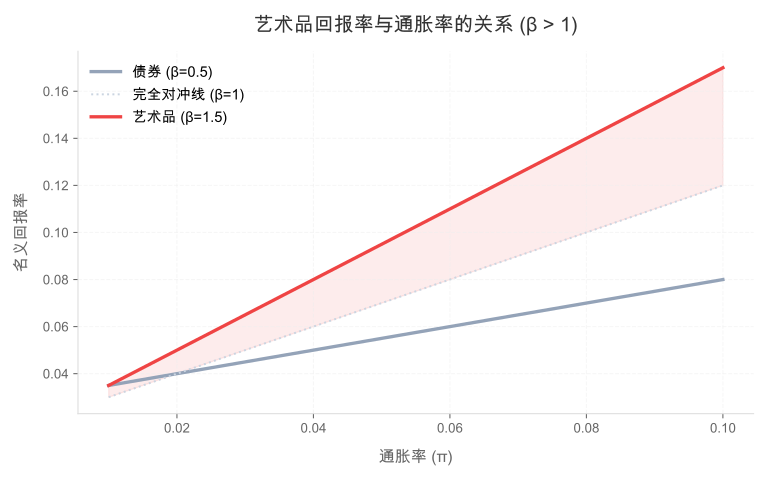
Multiple studies on the post-war art market show that during the high inflation period of the 1970s, the nominal return on art far exceeded the inflation rate, with estimated values generally above 1.5. Art possesses the dual identity of a “real asset” and a “store of scarcity.” When inflation expectations rise, capital floods in seeking refuge.
Cross-Cycle Wealth Storage: Asymmetric Value Retention
Cross-Cycle Wealth Storage: Asymmetric Value Retention
In extreme risk events (wars, currency crises, regime changes), art exhibits the characteristics of a “value shock absorber.” Under Barro’s (2006) disaster risk framework, the risk-free rate of an asset is determined by the following equation: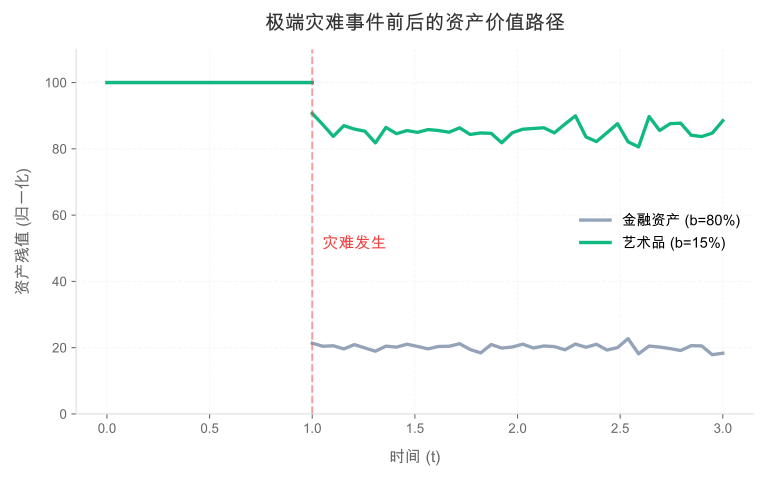
When a disaster occurs, the loss proportion is significantly smaller than or . A masterpiece will not have its ownership wiped out by bombing (it is transferable and hideable), and its value carrier is cultural consensus rather than a central counterparty or a promise to pay. Historically, art has served as a wealth “Noah’s Ark” during WWII, the Weimar hyperinflation, and emerging market currency crises.
Art is a rare asset whose consumption value can be directly incorporated into investment return calculations. Classic asset pricing only considers monetary returns, but art provides composite utility:In equilibrium, if two assets have identical risk profiles, but one provides a positive spiritual dividend , investors are willing to accept a lower nominal return to hold it: .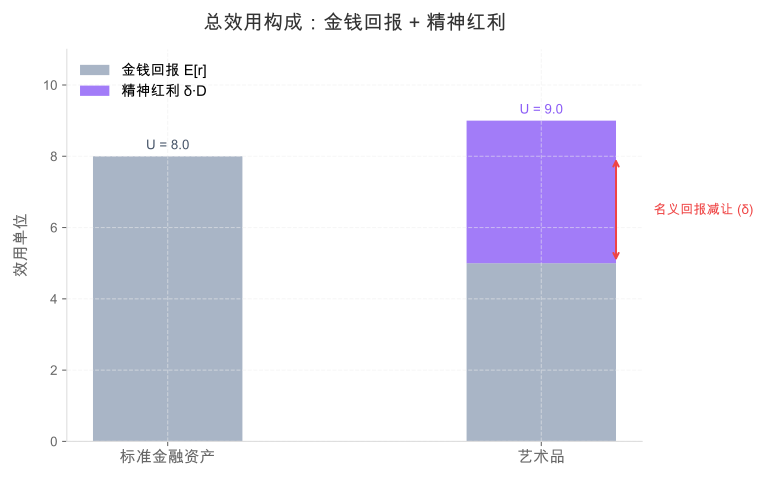
is the price concession the market pays for “enjoyment.” This is not market failure, but rational behavior: holding an original masterpiece means you can see it in your living room every day. This experience changes the “perceived temperature” of the asset, making it both consumption and investment.
The Hard Constraint of Scarcity: A Natural Anti-Dilution Mechanism
The Hard Constraint of Scarcity: A Natural Anti-Dilution Mechanism
In the stock market, companies can issue new shares; in the bond market, governments can roll over new debt; in the crypto market, tokens can be inflated or forked. But there will never be another authentic “Water Lilies” by Monet. The supply function of fine art is extremely inelastic: (Strictly fixed).When demand rises due to cultural consensus, wealth growth, or the entry of emerging market collectors, prices have only one way to go: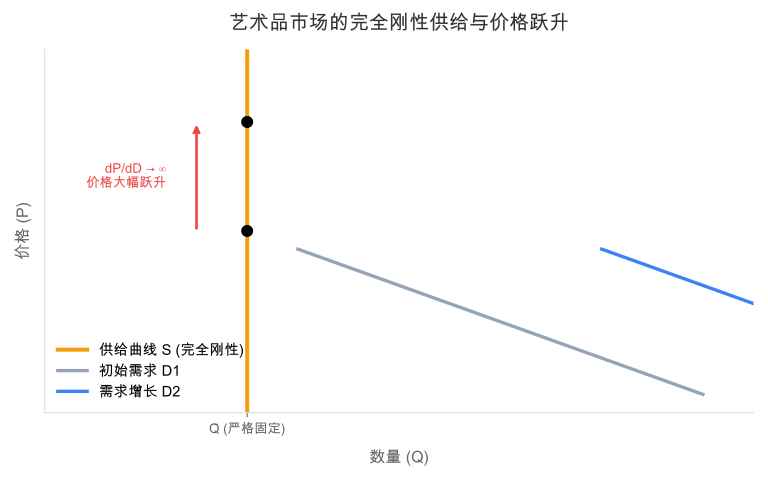
This fixed-quantity, anti-dilution characteristic is almost solely partially possessed by gold in the financial world, but gold still has new annual mining output. However, the net supply of masterpieces by deceased masters is zero or negative (fires and war damage will only reduce the existing stock).
References
- Mei, J., & Moses, M. (2002). Art as an Investment and the Underperformance of Masterpieces. American Economic Review. Read Document
- Fisher, I. (1930). The Theory of Interest. Read Document
- Barro, R. J. (2006). Rare Disasters and Asset Markets in the Twentieth Century. The Quarterly Journal of Economics. Read Document